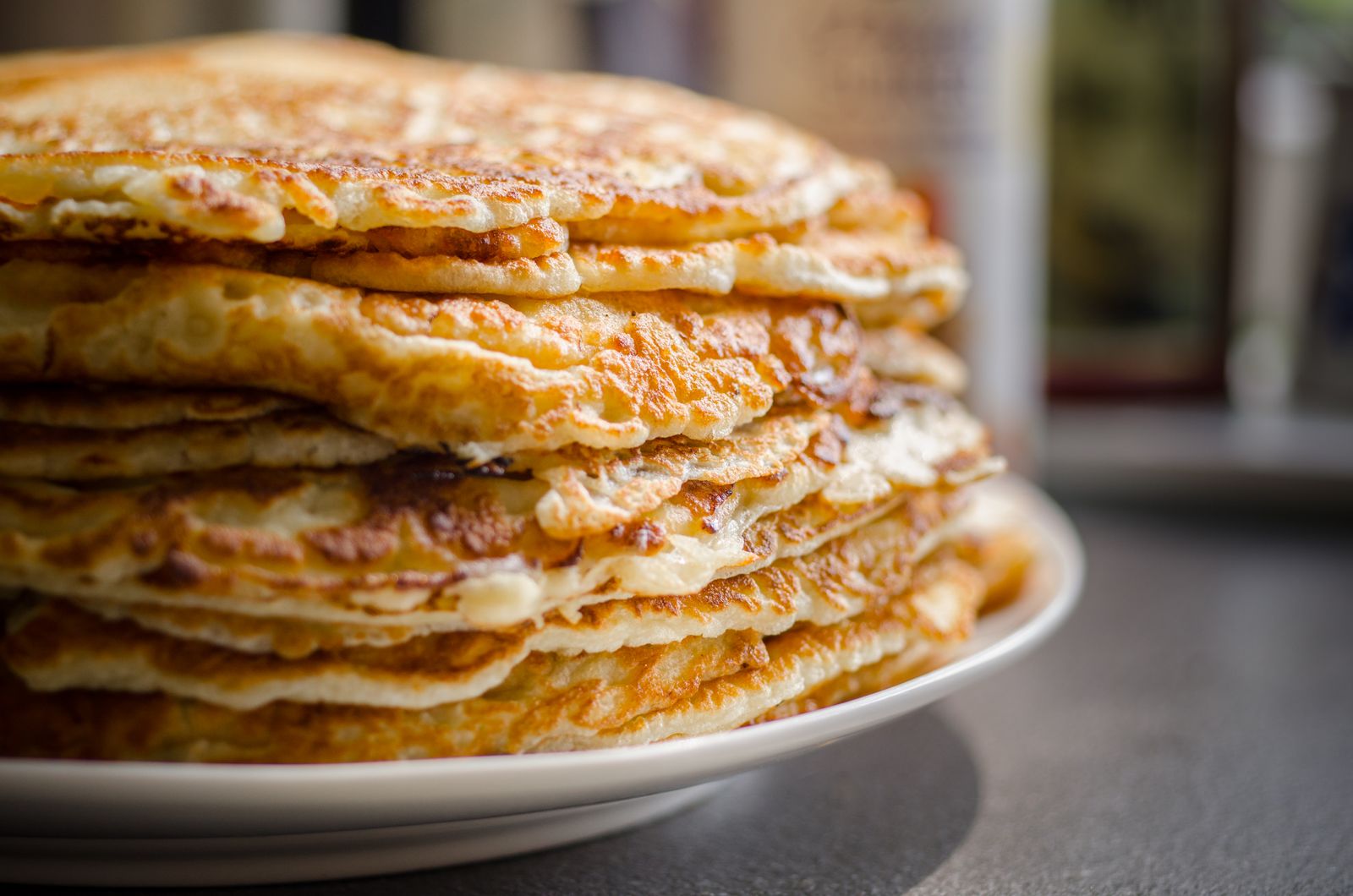
A weekend pancake breakfast starts with two bowls and a few cupboard ingredients. Measure everything before heating the pan, mix gently, and let the first pancake show you whether the heat needs adjusting.
This batter makes about eight small pancakes, enough for two to three servings. Allow roughly ten minutes to measure and mix, plus ten to fifteen minutes to cook, depending on the size of your pan.
Gather the ingredients
Use plain all-purpose flour and baking powder. The quantities below use a 240 ml measuring cup, a 15 ml tablespoon, and a 5 ml teaspoon. Weighing the flour is the most consistent option. If measuring by volume, spoon it into the cup and level the top.
- Dry ingredients. 125 g all-purpose flour, about 1 cup; 2 teaspoons baking powder; 1 tablespoon sugar; and ¼ teaspoon fine salt.
- Wet ingredients. 180 ml milk, about ¾ cup; 1 large egg; and 2 tablespoons melted butter, cooled until just warm.
- For the pan and serving. A little neutral oil or butter for greasing, plus sliced fruit, jam, or syrup to serve. Add ½ teaspoon vanilla to the batter if you like.
Mix without making the batter perfectly smooth
- Combine the dry ingredients. Whisk the flour, baking powder, sugar, and salt in a mixing bowl so the baking powder is evenly distributed.
- Combine the wet ingredients. In another bowl or jug, beat the egg with the milk. Stir in the cooled melted butter and optional vanilla.
- Bring the mixtures together. Pour the wet mixture into the dry ingredients. Fold gently until no large pockets of dry flour remain. Small lumps are fine. Stop stirring once everything is moistened.
- Rest briefly. Leave the batter for about five minutes while you prepare the pan. It should pour slowly from a spoon. If it is too stiff to spread at all, gently stir in extra milk one tablespoon at a time.
Cook a small test pancake
Heat a nonstick frying pan over medium-low heat and grease it lightly. Spoon in about 3 tablespoons of batter for one pancake. Let it spread naturally, leaving room around it for a spatula.
Cook until bubbles appear across the surface, the edges look set, and the underside is golden, usually about two minutes. Slide a spatula underneath and flip gently. Cook the second side for another one to two minutes, until the center is set with no wet batter.
Cut into the first pancake to check the center. If the outside browns before the middle cooks, lower the heat and allow the pan to cool slightly before the next batch. If it stays pale for several minutes, increase the heat a little.
Finish the batch at a steady pace
Cook the remaining batter in small batches, greasing the pan lightly as needed. Leave space between pancakes so you can turn them cleanly. Avoid pressing them down with the spatula after flipping.
The pan may become hotter as you work, so watch the color rather than relying only on the timer. Remove browned butter residue between batches if it begins to scorch. Serve pancakes as they are ready or keep them briefly on a warm plate.
Choose toppings and adjust next time
Try banana slices with a little syrup, a spoonful of jam, or yogurt and fruit. Keep toppings separate until serving so everyone can choose their amount and the pancakes stay soft without becoming soaked.
For the next batch, note any extra milk you added and the heat setting that worked on your stove. Flour, pans, and burners vary. Those small observations make the same recipe easier to repeat on another weekend.