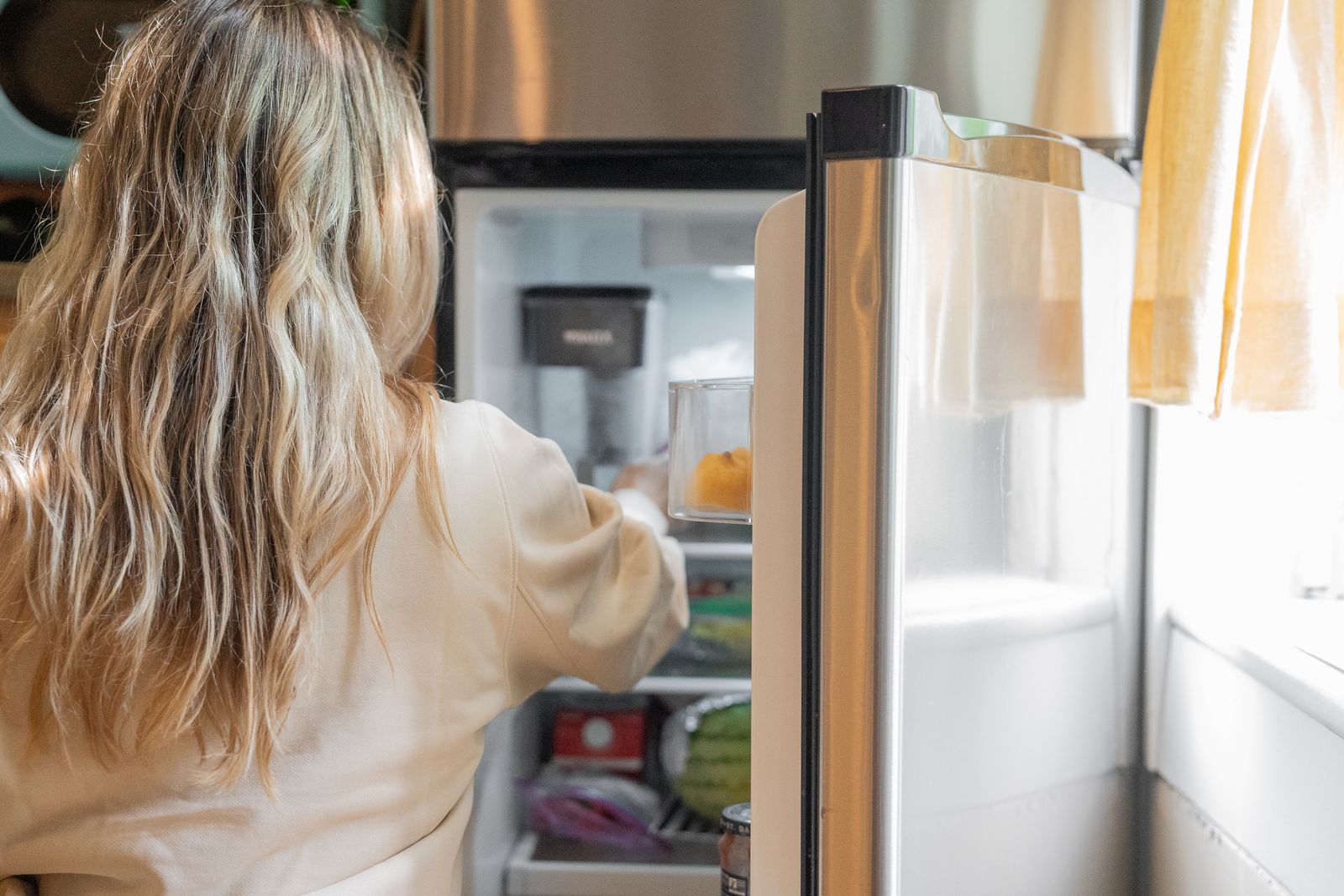
You open the freezer looking for dinner and find three half-used bags of vegetables, an unmarked container, and chicken hidden behind the ice tray. Everything fits, but finding a meal takes longer than cooking it should.
A useful freezer arrangement helps you answer two questions quickly. What can I cook tonight, and what should I use next? Start with the food already inside, then choose a few habits that make the contents easier to see.
Take stock one section at a time
Have a pen, labels, and an insulated cooler with ice packs ready before opening the freezer. Work through one drawer or shelf at a time, keeping food frozen while you sort. Return each group promptly and close the door between sections. A full defrost can be planned separately according to the appliance instructions.
Write down recognizable items and their quantities. Two portions of curry, six chicken thighs, and half a bag of peas are more useful descriptions than meals, meat, and vegetables. Separate anything you cannot identify or whose storage history is uncertain so you can make a decision before returning it.
Keep the freezer at −18°C or below and check it with an appliance thermometer. Freezing does not make previously unsafe food safe. If you discover food that has thawed unexpectedly, assess it using food-safety guidance before keeping it.
Group food around the meals you cook
Choose a few broad groups that suit your household. Raw ingredients, cooked meals, vegetables, and bread are often enough. In a small freezer, one side of a shelf can serve as a group. In a chest freezer, removable baskets can make lower layers easier to reach.
Keep raw meat and fish securely wrapped and separated from ready-to-eat foods. Put the food you reach for most where you can lift it out without unloading another group. Leave the appliance’s air vents clear and follow its loading guidance.
Use containers you already own if they fit the space and tolerate freezer temperatures. Before buying organizers, measure the drawer with its runners and handles in mind. A bin that fits the empty compartment may still stop the drawer from closing once packets stand above its rim.
Freeze portions you will actually use
Divide a large pack into the amounts you normally cook before freezing. If dinner usually needs two chicken thighs, a single frozen block of eight makes the next meal harder to plan. Wrap each portion securely using packaging intended for the freezer.
For foods suitable for flat storage, use freezer bags and spread the contents into a thin, even layer. Freeze them flat, then stand the firm packets upright where practical. Leave suitable expansion space for liquids and follow the container maker’s guidance.
Cool cooked food promptly and handle it safely before freezing. Use shallow portions instead of leaving a large pot on the counter to cool for hours. Keep cooking instructions from commercial packages when you divide their contents, especially if preparation from frozen is required.
Label the edge you can see
Write the food name, date frozen, and number of portions before the package gets cold and damp. Add raw or cooked when the distinction would be unclear later. Place the label on the side facing you in the drawer, rather than only on the lid.
Use a consistent date format, such as 10 Nov 2026. If a packet already has a freezing date, keep that date when reorganizing it. Follow product storage instructions and use appropriate storage guidance for different foods. A date helps you rotate stock, but it does not prove how the food was handled.
Air exposure can cause freezer burn and reduce quality. Check for torn bags or loose lids while labeling. Rewrap sound packages when needed and make the affected food a priority for an appropriate meal if its storage history is known to be safe.
Give older food a place near the front
Choose a small use-next area for the oldest suitable meals and open packets. When you add a new pack, place it behind the older one in the same group. Keep only a few priorities visible so this area remains easy to understand.
For example, an older portion of tomato sauce and half a bag of peas can become part of a pasta dinner. Put those ingredients on the week’s meal plan before shopping. Plan refrigerator thawing ahead of time in a container that catches drips, rather than leaving food on the counter.
Check the freezer before writing the shopping list
Keep a short inventory on paper nearby or in a shared phone note. Update it when the last portion leaves and when a new batch goes in. If detailed counts are hard to maintain, track cooked meals and the ingredients you most often buy twice.
Before a grocery trip, take a quick look inside and choose one or two meals from your stock. Leave room for the food you genuinely plan to freeze. After a few weeks, repeated leftovers will show which package sizes and batch recipes suit your household best.