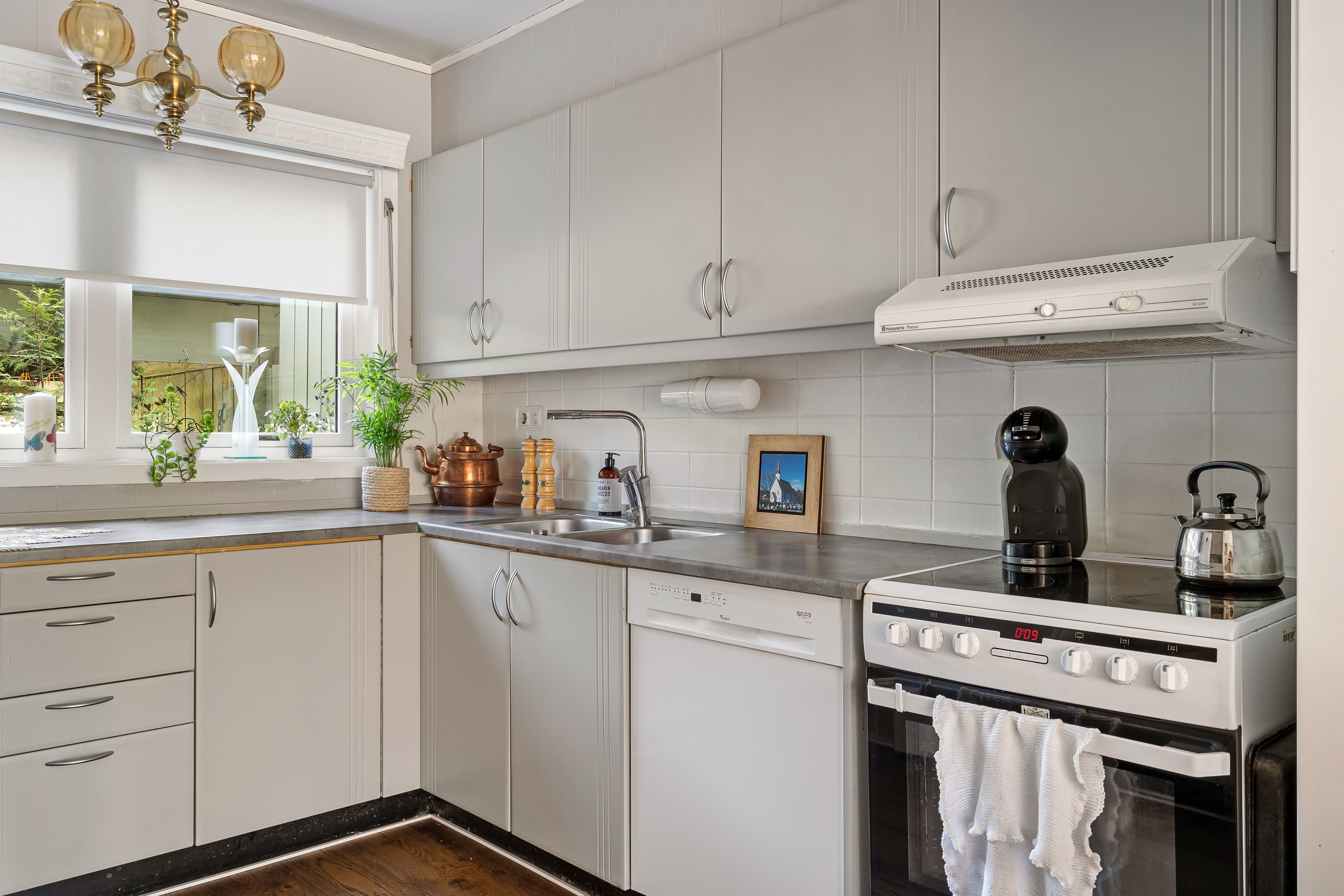
Creating more usable space starts with understanding how you move through the kitchen. Where do you prepare ingredients? Which utensils do you reach for most often? What do you have to move every time you open a cupboard? The most useful changes address those small frustrations. Before adding shelves or buying containers, look at what you already own and how your kitchen supports your routine. These seven approaches can help you make better use of the space you have, whether you cook every day or mostly prepare quick meals.
1. Clear Your Counters With Everyday Tasks in Mind
Counter space is valuable in a small kitchen. When every surface becomes permanent storage, even making a sandwich can require moving several things first.
Start by choosing one area to keep clear for food preparation. It does not have to be large, but it should be easy to reach and comfortable to work at.
Remove everything from that area and consider each item before putting it back.
An appliance you use every morning may deserve a permanent spot. Something you use occasionally might be better stored in an accessible cupboard. Decorative pieces can stay where they leave enough room for the tasks you regularly perform.
The aim is to give each countertop item a reason to be there.
Group items that belong to the same activity.
For example, keep your kettle, mugs, and everyday drink supplies together. Place frequently used cooking utensils near the preparation or cooking area, while maintaining suitable clearance from heat.
A small tray can keep related items together and make wiping the counter easier. Choose one that holds what you need without spreading into your preparation space.
Pay attention to temporary clutter, too. Mail, shopping bags, water bottles, and keys often land in kitchens because there is no convenient place for them elsewhere. Giving those items a home near the entrance can free up kitchen space without changing the kitchen itself.
Try this: Prepare a simple meal after clearing your chosen work area. Notice what you reach for and what interrupts you. Use that experience to decide what belongs nearby.
2. Use Vertical Space Without Making Things Hard to Reach
When floor and counter space are limited, look for unused height inside cupboards and above existing storage.
A tall cupboard may have plenty of empty space above a short stack of plates. An adjustable shelf or suitable shelf insert can divide that space into more useful levels.
Before adding anything, measure the cupboard’s internal width, depth, and height. Check for hinges, door frames, or other fittings that reduce the usable opening.
Think about what will sit on each level. A shelf arrangement that works for mugs may not leave enough clearance for bottles or cereal containers.
Store items according to weight and frequency of use.
Keep frequently used supplies within comfortable reach. Place heavier cookware and appliances on lower, stable shelves. Higher spaces are usually better suited to lightweight items you use less often.
Avoid stacking so high that removing one item becomes a balancing exercise. If you need to unload half a shelf to reach a bowl, the arrangement needs adjusting.
A freestanding rack can provide useful storage where there is suitable floor space. Check its dimensions, confirmed load limits, and assembly instructions before deciding where to put it. Follow any anchoring requirements and keep doors and walkways clear.
Hooks or rails may help with certain utensils, but only where the mounting method and surface are appropriate. Check the stated weight limits and, in rented homes, any restrictions on installation.
Leave enough room around stored items to retrieve them easily. Empty space between shelves and objects can make storage more usable, even if it means fitting slightly less.
3. Arrange Your Kitchen Around Simple Work Zones
A kitchen is easier to use when the items needed for a task are stored together.
You do not need a large room or separate workstations to create zones. In a compact kitchen, a zone may be one drawer, part of a cupboard, or a small section of countertop.
Start with your most common activities.
Food preparation: Keep chopping boards, mixing bowls, measuring tools, and frequently used preparation utensils near your main work surface.
Cooking: Store pots, pans, and suitable cooking utensils where they are easy to retrieve. Keep stored items clear of hot surfaces and follow product instructions for anything affected by heat.
Serving: Group everyday plates, bowls, glasses, and cutlery so setting the table is straightforward.
Cleaning: Give dishwashing supplies, brushes, and cleaning cloths an appropriate home near the sink. Store cleaning chemicals separately from food and according to their labels.
Food storage: Keep containers, lids, and other storage supplies together so putting leftovers away does not become a search.
These zones can overlap. What matters is reducing unnecessary movement.
Think about the order in which you do things. If you make breakfast every morning, having bowls near cereal may be more useful than keeping every bowl beside your serving dishes.
If several people share the kitchen, explain the arrangement and keep it intuitive. A system that makes sense only to the person who organized it will be difficult to maintain.
After a few days, move anything that repeatedly feels inconvenient. Your routine should guide the layout.
4. Choose Containers That Fit Your Shelves and Habits
Matching containers can look tidy, but their shape, size, and ease of use matter more than their appearance.
Before buying organizers, measure the space where they will go. Include the shelf depth, available height, and cupboard opening. Leave enough clearance to lift lids or pull containers out.
Consider what each container needs to hold. A small container that leaves you storing half the original package elsewhere can create extra work and use more space.
Square and rectangular containers can make efficient use of straight shelves, but the best choice depends on the contents and available space. Rounded containers may still suit your routine, especially if you already own and use them.
Look beyond whether a container stacks.
Check whether it is easy to open, comfortable to lift, and straightforward to clean. A tall stack may fit neatly but become inconvenient if you regularly need the bottom container.
For refrigerator use, check that drawers and doors can still open fully. For microwave, freezer, or dishwasher use, follow the manufacturer’s stated suitability.
You also do not need to transfer every food item into a separate container. Original packaging may already be practical. If you do transfer contents, keep important product information, including relevant storage instructions, dates, ingredients, and allergen details.
Glass bottles can be useful for suitable liquids, but choose closures that work for the intended contents. Label anything that could otherwise be confused with another ingredient.
Try this: Organize one shelf with containers you already have. Use it for a week before deciding whether anything else is needed.
5. Organize the Refrigerator So Food Stays Visible
A refrigerator can appear full when much of its space is simply difficult to see or reach.
Start by checking the contents and cleaning according to the appliance instructions. Return food promptly and follow appropriate storage guidance for each item.
Then arrange the contents so frequently used foods are accessible and small items do not disappear behind larger ones.
Broad groups can help. You might keep breakfast supplies together, gather suitable condiments in one area, and create a clearly visible place for leftovers.
Follow food-safety storage requirements before choosing the most convenient location. For example, keep raw meat securely contained on a lower shelf so leaks cannot contaminate other foods. Use the appliance’s instructions to guide airflow and compartment use.
Use bins selectively.
A shallow bin can help gather small items that otherwise scatter across a shelf. But several large bins can reduce flexibility and make bulky groceries harder to fit.
Choose organizers that are easy to remove and clean. Avoid filling every gap; leave vents unobstructed and maintain the airflow recommended for your refrigerator.
Make leftovers easy to identify. Labels with the contents and storage date can prevent uncertainty about what is inside. Keep appropriate ready-to-eat foods that need using soon where you will notice them, while still following storage and use-by guidance.
A quick check before grocery shopping can reveal duplicates and ingredients that need attention. It also gives you a chance to make room for incoming groceries without a major rearrangement.
The same visibility principle applies to the freezer: label packages clearly and group similar items where practical.
6. Give Awkward Items a Better Home
Lids, chopping boards, baking trays, and reusable containers often cause more frustration than larger kitchen items.
They slide behind other objects, fall over, or become buried in uneven stacks.
For suitable items, vertical storage can make access easier. A stable divider may allow you to store trays, boards, or lids upright so you can remove one without lifting everything above it.
Check that the divider fits inside the cupboard with the door closed. It should support the items without tipping or placing unnecessary pressure on them.
Keep reusable containers manageable.
Match each container with its lid and check its condition. Set aside pieces that are damaged or no longer suitable for their intended use. Decide whether unmatched pieces have a real purpose before returning them to storage.
Nest compatible empty containers when practical, and store lids in a way that makes the correct one easy to find. Avoid building a stack so tightly packed that taking one out causes the rest to spill.
For cookware, use stacking methods suitable for the material and follow care guidance to protect finishes. Keep your most-used pot or pan accessible rather than placing it at the bottom of the largest pile.
Under-sink cupboards need their own approach. Measure around pipes and allow access for maintenance. Use appropriate storage for cleaning supplies, taking account of potential leaks, ventilation requirements, and child or pet access.
Solve one awkward category at a time. Fixing a lid drawer or tray cupboard can noticeably improve the kitchen without requiring a complete reorganization.
7. Limit Backup Supplies and Build a Short Reset Routine
Even a well-organized kitchen becomes crowded when new items arrive faster than old ones are used.
Set aside one defined area for suitable backup supplies. This might be part of a shelf or a small section of a cupboard.
Keep the contents visible so you can check what you have before shopping. If supplies are spread across several hidden places, it is easy to buy duplicates.
Choose backup quantities based on how quickly your household uses each item and the storage guidance it requires. There is no need to keep the same amount of everything.
Let your available space guide restocking.
When the designated area is full, review what is already there before adding more. Keep older stock accessible and avoid opening another package simply because the current one is hard to find.
Pair this with a brief kitchen reset after your main meal or at another convenient time.
Put ingredients away, return utensils to their places, clear the preparation surface, and check whether anything needs adding to your shopping list.
Notice items that repeatedly remain on the counter. Their assigned storage may be inconvenient, overcrowded, or too far from where they are used.
Adjust the system when that happens. An organizer should make putting something away easier, not introduce another step that everyone avoids.
Start with whichever area interrupts you most often: the crowded counter, the unstable stack of containers, or the cupboard you dread opening. Make one change, use it during your normal routine, and let what you learn guide the next one.