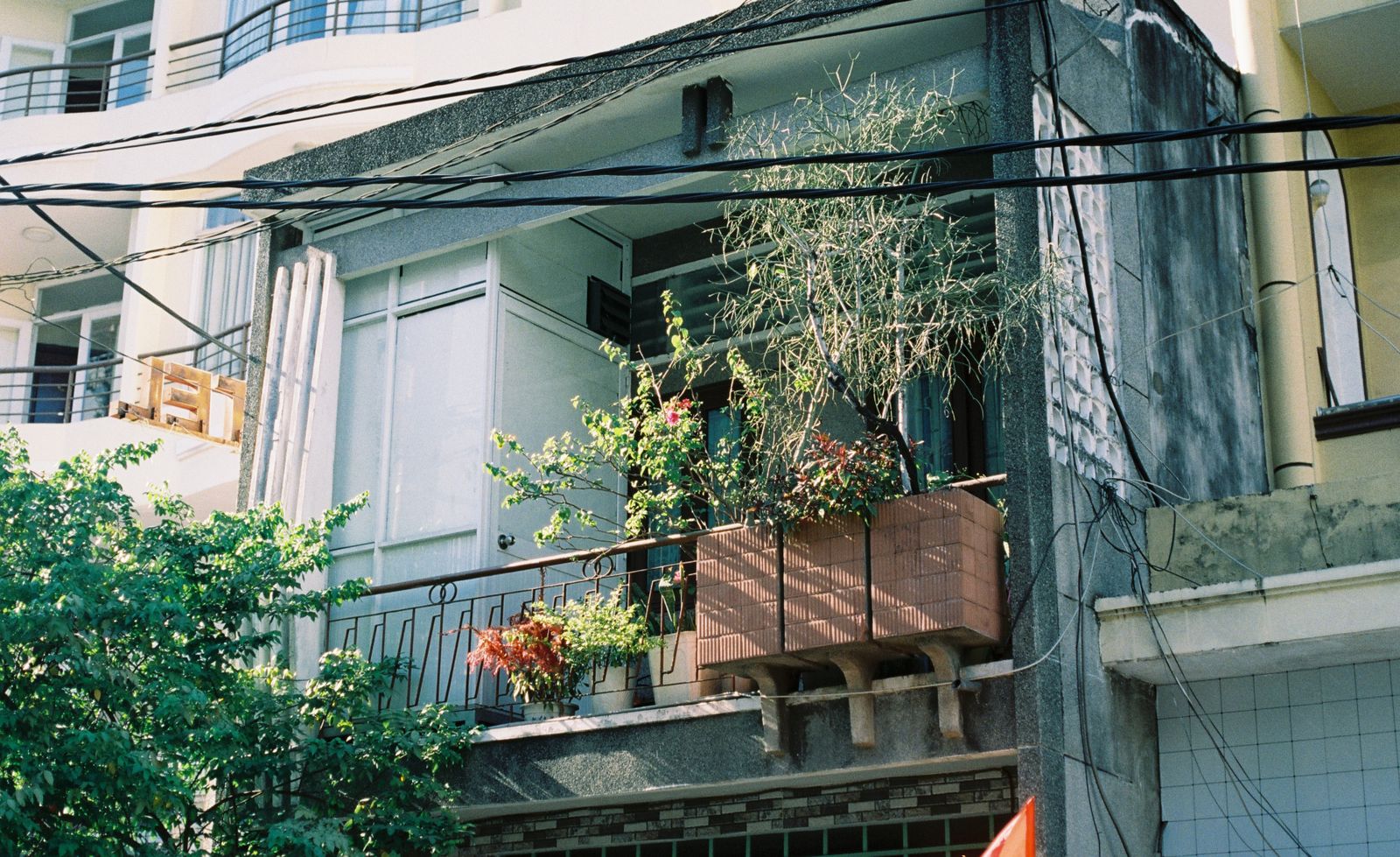
A weekend away can be a long dry spell for a small pot in afternoon sun. A large container in a sheltered corner may still be moist when you return. Start with the plants and conditions on your own balcony, then choose a plan for the actual days you will be gone.
Find the pots that dry first
Several days before departure, check the potting mix below the surface and note which containers need watering each day. Pay particular attention to small pots, hanging baskets, and leafy vegetables. Let those observations guide the plan rather than assuming every pot needs the same amount.
Check the forecast before you leave. Hot, windy conditions can shorten the time between waterings. Rain may miss pots beneath a balcony roof, so look at where water actually lands before relying on a wet forecast.
Move thirsty pots into temporary shelter
Group portable plants with similar needs in a sheltered spot with bright light and less intense afternoon sun. Leave space around the leaves for air to move. Keep drought-tolerant plants separate so a helper can recognize that they need a different check.
Place containers securely inside the balcony and keep the doorway and drain clear. Avoid crowding all the pots onto one small stand. Choose their temporary positions early enough to observe how quickly the mix dries there.
Water thoroughly when the mix needs it
Before departure, check each pot and water those that are ready. Apply water slowly to the potting mix, let it soak in, and allow excess to drain through the holes. Empty collected water from ordinary saucers after drainage.
Leaving pots standing in deep trays of water can keep roots too wet. A purpose-made self-watering pot has a separate reservoir and its own filling instructions. If you already use one, check that it is working and refill it as directed.
Test any watering device while you are home
If you plan to use a bottle dripper, wick, or small irrigation system, set it up several days ahead in the position it will occupy during the trip. Check both the water supply and the mix in each pot. A reservoir getting emptier does not prove that every plant is receiving enough water.
Observe the setup for at least the length of your planned absence when practical. Look for a bottle that empties too quickly, a wick that stops supplying water, or an emitter that misses the pot. Secure tubing and reservoirs, cover stored water, and make sure overflow cannot run onto a neighbor’s balcony. Arrange a helper if the trial does not keep moisture suitable for the plants.
Leave a helper a short, specific plan
For pots that need regular attention, ask someone to visit at intervals based on your observations. Label the plants and group them by watering needs. Show the helper how you check the mix and where excess water should drain.
Leave the watering can within reach and explain which pots to check first. A useful note might say that the basil usually dries sooner than the large ornamental pot, and that the succulent should be checked separately. Ask for a photo if a plant looks unusually wilted instead of requesting an automatic extra soaking.
Check the mix again when you return
Feel the potting mix before watering. A plant can look unhappy when its roots are too wet as well as too dry. Water dry containers slowly, let them drain, and check that any automated supply has been switched off or returned to its normal setting.
Move sheltered plants back toward their usual light gradually if their exposure changed substantially. Keep a note of which pots dried fastest and how much water the setup used. That record will make planning your next short trip easier.