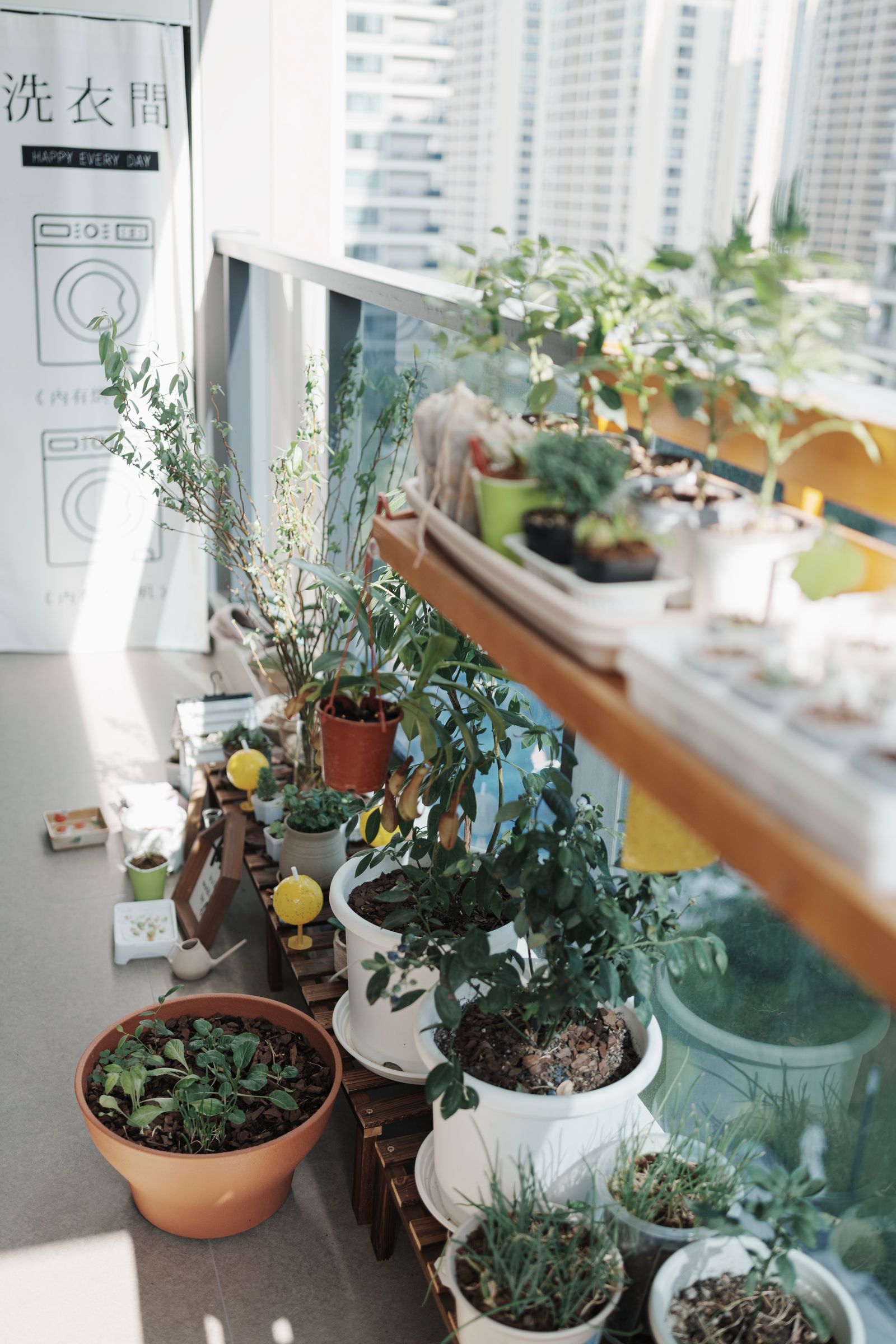
A balcony can look bright all morning while the floor behind its railing stays in shade. Before choosing an herb, put an empty pot where you plan to grow it and check the light at its rim.
Follow the patch of sun
On a mostly clear day, look at the pot about once an hour from early morning to late afternoon. Hold your hand just above the rim. A distinct shadow in a sunlit patch is a handy sign of direct light. Bright open shade still gives a plant light, but record it separately.
Note when direct sun first reaches the pot and when the railing, roof, or next building cuts it off. If sunlight returns later, record that interval too. Clouds can obscure the pattern, so repeat on another day if the first one is overcast.
Add the intervals for each spot
Suppose the pot gets direct sun from 8 to 10 in the morning and again from 1 to 3 in the afternoon. That’s about four hours. Ten hours of brightness between breakfast and dinner can feel like a sunny day indoors, yet the pot only spent four of them in the beam.
Compare two positions if you can. A pot just inside the railing may get an extra hour compared with one beside the door. Keep containers on a stable surface inside the balcony edge.
Choose a herb for the hours you counted
With roughly six or more hours of direct sun, basil is a reasonable first choice. If your spot receives only part-day sun, try mint in a pot of its own. It tolerates some shade, and its spreading stems are easier to manage in a separate container.
If the spot stays in deep shade all day, check another location before buying seedlings. A bright windowsill elsewhere in the home may give you a longer stretch of direct light.
Check again as the season changes
Write the month and the hours of sun on the plant label. Watch where the shadow falls a few weeks later, especially under a deep balcony roof. If new growth becomes long and sparse, check the light again at leaf height before moving the pot.
When moving a plant from shade into much stronger sun, increase its exposure gradually. Start with the gentler morning interval you measured and watch how the leaves respond.