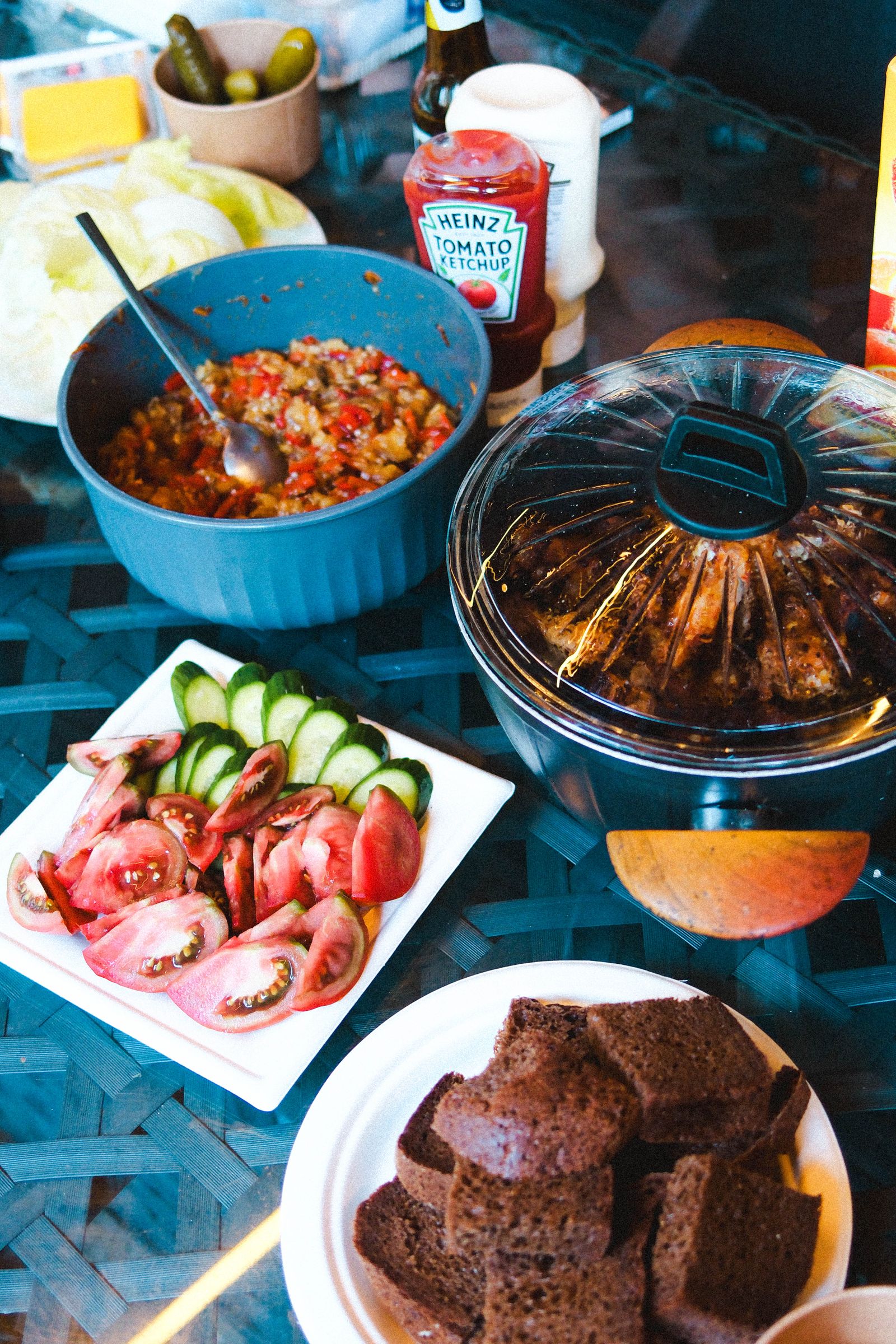
A casual potluck can work well in a small home when everyone knows what to bring and where the food will go. Start with a comfortable number of guests, then plan the meal around the space you already have.
The aim is an evening where people can sit, serve themselves, and talk easily. A few practical decisions before the invitations go out can save repeated trips around a crowded kitchen.
Count comfortable places before inviting
Look at the seats people can actually use while eating. A sofa may be comfortable for conversation but awkward for a dish that needs cutting. Choose food and serving styles that suit the seating, and leave a clear route to the bathroom and entrance.
Pick a guest count that fits those places. Tell people the arrival and eating times so dishes do not arrive several hours apart. Mention any stairs, limited seating, or other access details that guests need to plan their visit.
Give each dish a clear role
Offer a few broad categories such as a main dish, a vegetable side, bread, dessert, and drinks. Keep a shared list or confirm choices directly so several people do not arrive with the same contribution.
Ask about dietary needs before settling the menu. Request ingredient information and a serving utensil with each dish. Where allergies are involved, discuss what guests can safely eat and how food will be kept separate. Labels and separate utensils help communication but cannot guarantee the absence of cross-contact.
Check whether each contribution needs refrigeration, reheating, or final preparation. Reserve appliance and fridge space before agreeing to several dishes that all need the oven at once.
Create a simple serving route
Choose one main surface for food and another small spot for drinks if space allows. Put plates at the beginning and utensils and napkins near the end so guests can pick them up after serving.
Move decorative objects temporarily to make room for stable dishes. Keep hot containers away from table edges and protect the surface beneath them. Put bags and coats in an agreed place that leaves seats and walking routes clear.
Use small serving dishes and replenish them from properly stored food. Guests can help themselves more easily when they do not have to lift a heavy casserole over another plate.
Plan for safe temperatures
Ask guests to transport perishable food cold in insulated containers with ice packs or hot using suitable equipment. Have fridge space ready for cold dishes on arrival. Keep cold food at 4°C or below and hot food at 60°C or above when holding it for service.
If food is served without temperature control, track its total time out, including transport and preparation. Refrigerate perishables within two hours, or within one hour when the surrounding temperature exceeds 32°C. Discard food that has exceeded those limits rather than saving it for later.
Put out fresh small portions on clean dishes instead of topping up a partly used platter. Use a food thermometer where needed and keep the serving plan simple enough to manage while enjoying the gathering.
Make arrivals and departures easy
Show guests where to place food and offer water while everyone settles. If someone wants to help, give them one clear task, such as setting out napkins or taking empty dishes to the kitchen. Keep the kitchen entrance usable as people arrive.
Before the evening ends, separate leftovers that are still safe to keep into suitable containers and refrigerate them promptly. Ask owners to identify their dishes and serving utensils. A small note on the underside of a container can prevent a mix-up.
Gather used plates in one place and leave a clear spot for returning containers. Once the practical work is under control, sit down with your guests. You can finish the routine washing up after the visit.