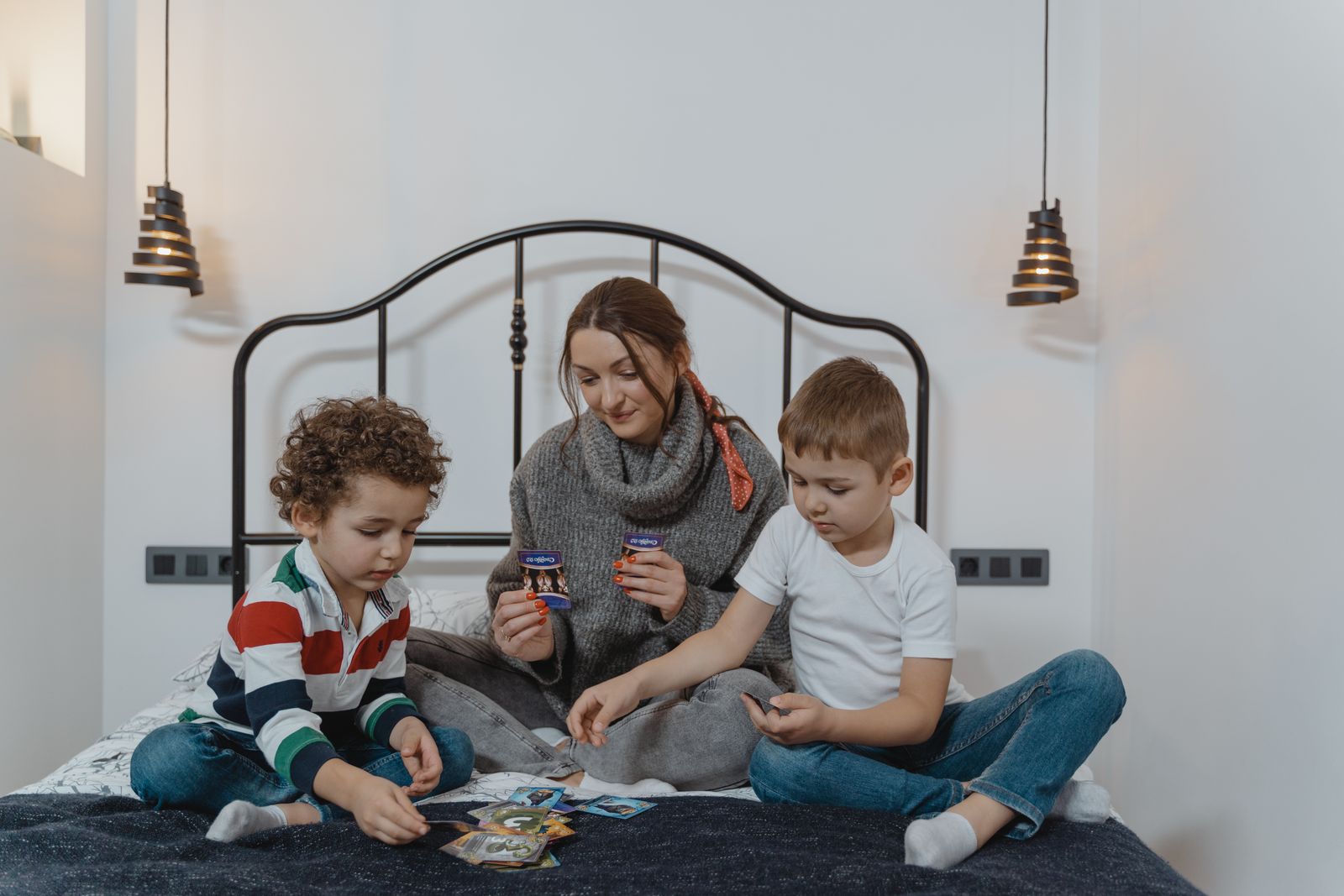
A family game night can begin with the cards, board games, or dominoes already in a cupboard. You only need a game everyone can join, somewhere comfortable to play, and enough time for a satisfying round.
Start with a short evening that fits your household. You can learn which games people enjoy and what makes taking turns easier before deciding whether to make it a regular occasion.
Check the games before choosing
Take out two or three options and check the pieces, cards, dice, and instructions. A quick check beforehand prevents the first round from stopping because a key piece is missing. Return unrelated games to the cupboard so the table stays manageable.
Choose games for the actual number of players and their comfort with reading, counting, and remembering rules. Age guidance on the box can help, but consider the people joining you. A familiar game is often an easy opening choice.
If a missing piece can be replaced clearly with something you already have, agree on the substitute before play. Keep small counters and other loose parts away from young children who may put them in their mouths. Choose another game if a safe, workable replacement is unavailable.
Agree on the length of the evening
Pick a start time that leaves enough room before bedtime or another commitment. For a first attempt, one or two short games may be plenty. Tell everyone roughly when you plan to finish so the last round is easy to recognize.
Choose a stopping rule before starting a longer game. You might finish the current round at a set time or use a shorter version provided in the instructions. Make sure everyone understands how a winner will be decided, if the game needs one.
Leave the evening open to a shorter finish if people become tired. Ending after an enjoyable round can make the next game night more appealing than pushing through another one simply because it was on the plan.
Make the playing space comfortable
Use a table, a clear patch of floor, or another stable surface that suits the game and the players. Check that everyone can see the board and reach the pieces without repeatedly leaning across someone else. Add suitable seating where needed.
Keep drinks on a separate surface or in stable containers away from cards and boards. Set snacks aside for a break if eating during turns would make handling pieces awkward. Clear a route around the playing area.
Bring the instructions, a pencil, and any score paper together before you begin. Ask participants to put distracting devices aside for the agreed playing time where practical, while allowing for any necessary availability.
Explain only what the first round needs
Show the goal of the game and demonstrate a turn. Point out how play passes to the next person and what ends a round. People who learn by doing may find a short practice round easier than a long explanation.
Keep the instructions nearby for questions. If a rule is unclear, pause and check it together. Avoid changing rules midway because one player is doing well or another has fallen behind. Agree on any house rules before the scored round starts.
Let a less experienced player ask for help without taking over every decision. A player can understand a choice and still choose differently from the person advising them. Give everyone room to try their own approach.
Make mixed ages easier to include
Consider pairing a younger or newer player with someone who can help read cards or count spaces. Agree on how the pair will share decisions so one person does not spend the whole game watching. Swap roles or partners between rounds if that helps.
Choose games with short turns when waiting is difficult. For an elimination game, consider a different option or an agreed version that keeps everyone involved, provided the adjustment still works fairly. Cooperative games already in your collection can offer another way to play together.
Give each person a chance to choose among suitable options over several evenings. You can rotate who selects the opening game while keeping the number of choices small enough to avoid a lengthy debate.
Handle competitive moments calmly
Agree that teasing, grabbing pieces, and arguing over every result can pause the game. Keep the expectations simple and apply them consistently. When someone gets frustrated, offer a short break rather than making the disagreement the focus of the evening.
Recognize thoughtful moves, funny moments, and helpful teamwork as well as winning. Let people enjoy a victory without turning every round into a comparison of ability. A difficult result can be acknowledged and followed by a fresh start.
If one game repeatedly causes tension, choose a different one next time. The game should suit the group you have. A simpler or shorter option may give everyone a better experience.
Finish with an easy reset
Count pieces back into their compartments and return cards to the box together. Keep a note of any missing item so it can be found before the next session. Clear the playing area while everyone is still nearby to help.
Ask which game people would like to repeat and whether the length felt right. Use one or two answers to shape the next evening. Keeping preparation and cleanup simple makes it easier to enjoy the games you already own again.