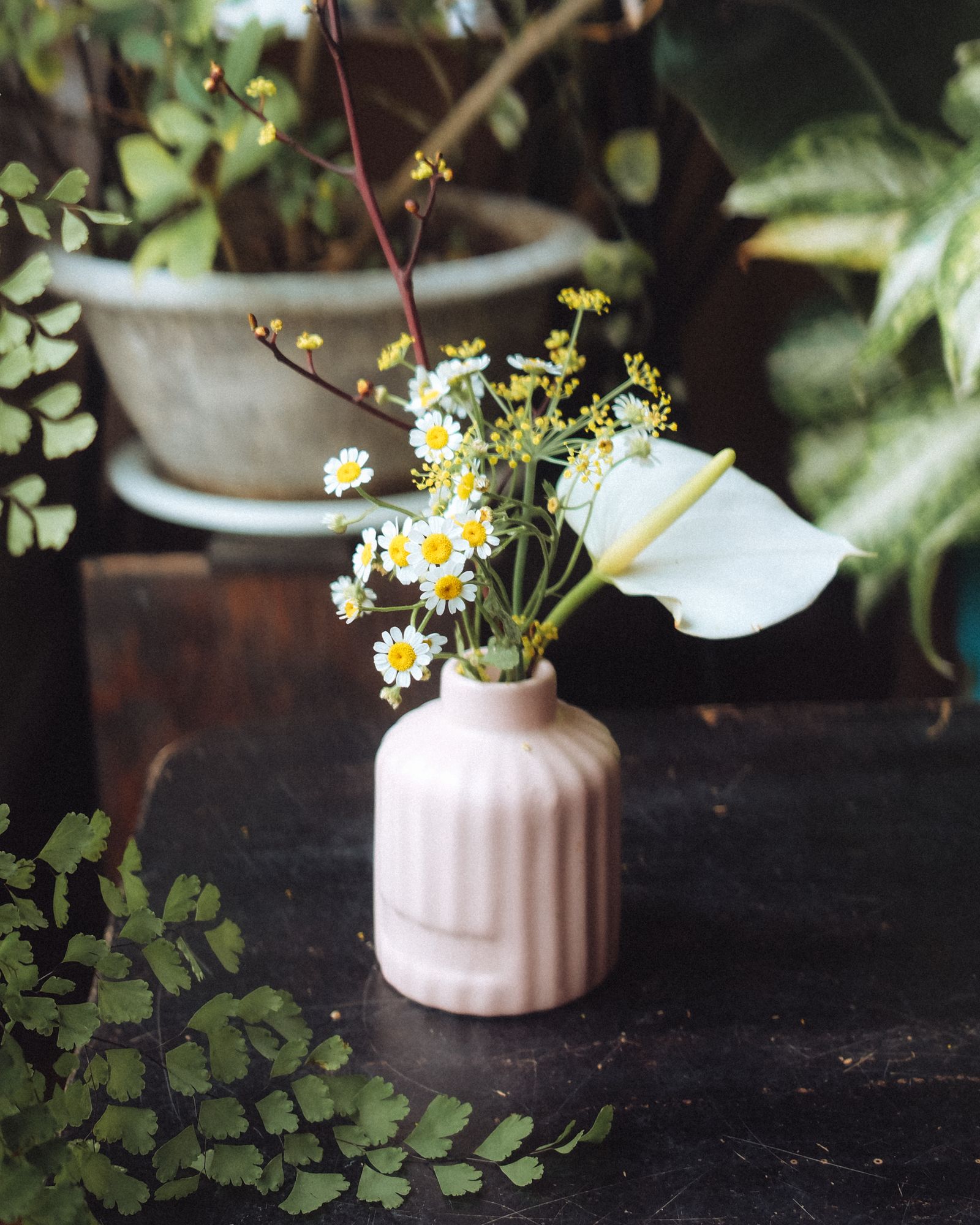
A few fresh stems can give a small table or shelf a gentle point of interest. With a little space between the flowers and a vase that supports them, even part of a shop-bought bunch can make a complete arrangement.
Start with the place where the vase will stand. Its position tells you how tall and wide the flowers can be, which side people will see, and whether the finished arrangement needs to leave room for a cup, a book, or conversation across the table.
Choose a vase that supports a few stems
Look for a clean, watertight vase with a stable base. A narrower opening helps hold a small number of stems upright. A wide opening needs more stems or a different arrangement to stop everything leaning toward the edges. Hold the empty vase in its intended place before choosing the flowers.
Check the scale against nearby objects. On a small bedside table, the vase should leave the lamp and other essentials easy to reach. For a dining table, sit down and check the likely flower height from across the surface. You can keep the arrangement low or move it aside during meals.
Pick a simple combination
Choose one main flower and, if you like, a second flower or a little foliage to accompany it. Begin with a small selection rather than trying to fit a whole mixed bouquet into one narrow vase. Keep unused stems in another container of water while you work.
Repeat a color from the vase, or choose a flower that stands out against it. Pale pink and white can look soft in a pink vase, while a deeper shade gives more contrast. These are starting points to test with your own flowers. Set the stems beside the vase and look at them in the room’s usual light.
If the blooms are large, two or three may fill the space comfortably. Smaller flowers on branching stems can give a fuller shape with fewer stems than you expect. Look at the size of the flower heads as well as the number in your hand.
Prepare the vase and stems
Wash the vase thoroughly with soapy water, rinse it, and add fresh water. If you have commercial cut-flower food, mix it according to the packet’s measured water quantity. A whole packet may be intended for more water than a small vase holds, so prepare the correct dilution in a separate jug if needed.
Use clean, sharp flower snips to recut the stem ends, then place the flowers in water promptly. Remove leaves that would sit below the waterline. Keep any species-specific preparation instructions supplied by the florist, as some flowers need different handling.
Set the height one stem at a time
Hold the first stem beside the vase with its end at roughly the level where it will rest inside. Picture where the flower head will sit above the rim. Start a little longer than you think you need, because you can shorten it after seeing it in place.
Place that stem and turn the vase to inspect the shape. Cut the next flower slightly shorter or position it at another angle so the heads do not form a rigid line. A modest difference in height can make a small arrangement feel relaxed without sending the tallest stem far above the others.
For an arrangement viewed from all sides, distribute the flowers around the opening. For a vase against a wall, you can place the taller stems toward the back. Check that every stem end reaches the water after you adjust it.
Build around the main flowers
Place your largest or most noticeable blooms first, then add the smaller ones between them. Let some heads face slightly outward so the arrangement has more than one view. Leave a little space around the flowers so their shapes remain visible.
Add foliage sparingly where it helps connect the stems or soften the vase edge. Remove a piece if it hides a flower you wanted to show. If the opening becomes crowded, transfer a few stems to a second small vase rather than forcing them into place.
When the flowers keep sliding outward, try a narrower vase or shorten a few stems to lower the arrangement. You can also let stems cross gently inside the vase for support. Avoid wedging them so tightly that you cannot lift the arrangement to change the water.
Try a small arrangement with five stems
For a simple example, take three modest-sized flower stems and two lighter branching stems or pieces of foliage. Put one flower a little off-center, then place the other two at slightly different heights around it. Keep their heads close enough to read as a group.
Add one lighter stem toward the back and the other near a side. Turn the vase and check the outline. If it looks crowded, remove one of the lighter pieces. Five stems are a useful starting quantity for this exercise, but the vase opening and flower size determine what fits.
Step back to the distance from which you will usually see it. A shape that looks uneven close up may feel balanced beside a lamp or picture. Adjust one stem at a time so you can see which change improves the result.
Place it and make a final check
Set the vase on a level surface where it will not be easily knocked. Protect furniture from water marks and wipe the outside after filling. Keep trailing stems within the available space so they do not catch a sleeve or lean into a walkway.
Choose a spot away from direct sun, heat, and ripening fruit. Check the water level daily and replace cloudy water with fresh solution, cleaning the vase as needed. Remove faded blooms so the remaining flowers have room.
As the bunch changes, shorten sound stems or move them into a smaller vessel. One or two remaining flowers can make a pleasing final arrangement. Take a quick photo of a combination you like so you can remember its proportions the next time you bring flowers home.