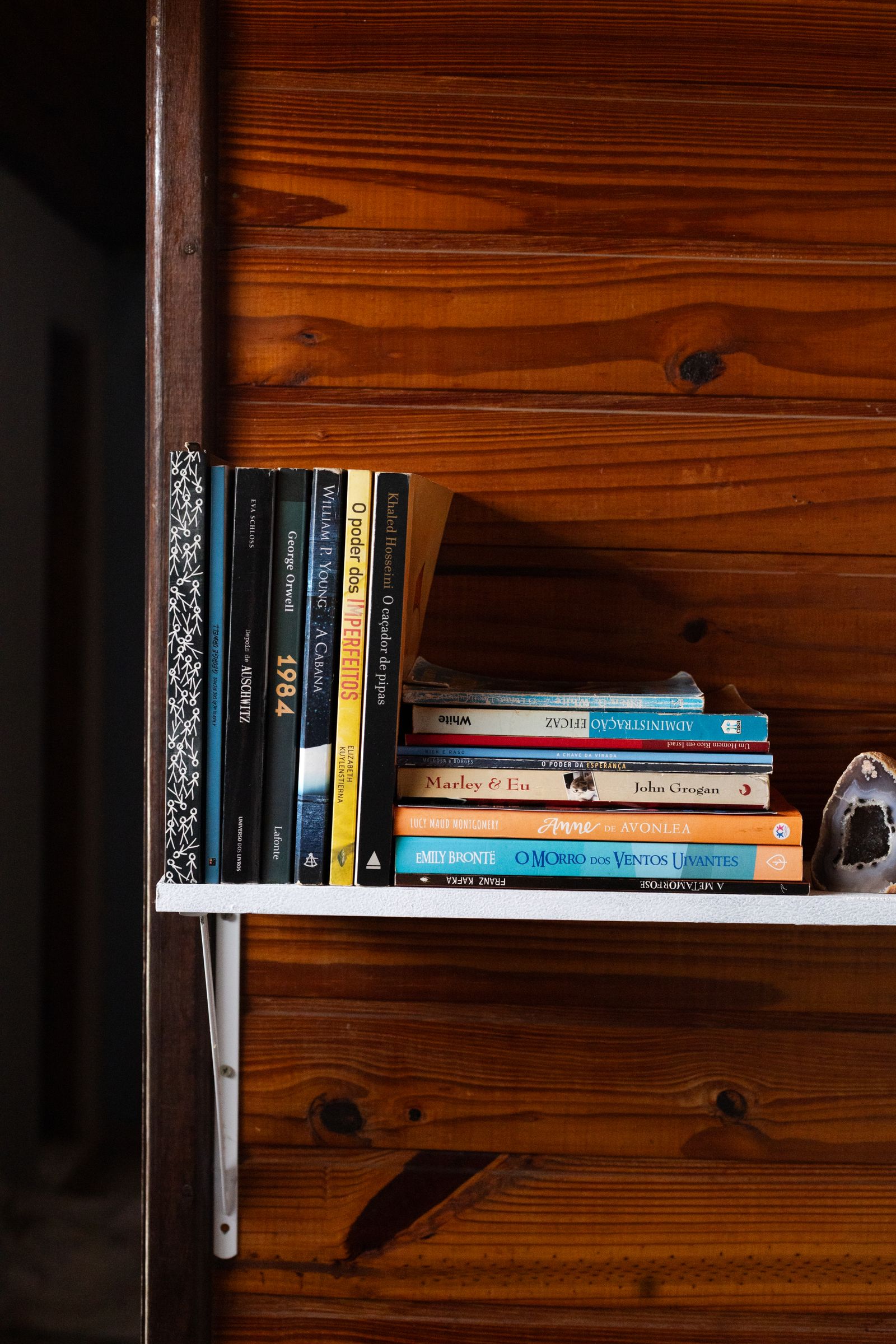
Open shelves often collect things gradually: a row of books, a holiday souvenir, a spare vase, and the letters you meant to sort. When everything competes for attention, it can be difficult to see the pieces you actually enjoy.
A thoughtful arrangement starts with looking at what you already have. You can change the feeling of a shelf by moving a few objects, adjusting the height of a group, or leaving a small area empty. Work on one section at a time so the project stays manageable.
Decide what the shelves need to hold
Before clearing anything, identify the shelf’s main job. A bookcase that holds your reading collection needs more space for books than a display shelf above a sideboard. Keep that everyday purpose in view as you choose what to put back.
Separate the things you reach for often from objects you simply like to see. Frequently used books should be easy to remove without lifting a vase or disturbing a stack. Put decorative pieces where they will not interrupt that movement.
Check that the shelf and its supports are secure and follow the manufacturer’s load limits and anchoring instructions. Books can be heavy. Keep heavier items on lower shelves and avoid extending objects beyond the front edge. Styling should work within the furniture’s intended use.
Gather a small selection from around your home
Clear one shelf onto a nearby table and dust the surface. Set aside paperwork, broken pieces, and objects that belong elsewhere. This gives you a clearer view of the usable space without emptying the entire room.
Gather a few possible additions from things you own: a framed photograph, a ceramic bowl, a wooden box, or a small piece of art. Look for objects you enjoy rather than items that merely fill a gap. You do not need to use every candidate.
Notice any colors or materials that already repeat. The wood of a picture frame might connect with a box, while a blue book spine could echo a bowl. Choose one or two of these connections to guide the arrangement without forcing everything into a matching set.
Keep objects with a shared story together if that feels natural. A photograph beside a small keepsake from the same trip can be more meaningful than an arrangement chosen only for its colors. Leave other collections stored until you want a change.
Let the books form the main structure
Begin with books because they usually occupy the largest part of the shelf. Keep a useful sorting method, such as author or subject, if you already rely on one. A display that looks tidy but hides the book you need quickly becomes frustrating.
Place most books upright with adequate support. You can add a short horizontal stack of similarly sized books to vary the outline, provided the books remain stable and accessible. Put larger volumes at the bottom of a stack and avoid making it so tall that retrieving one becomes awkward.
Leave titles visible if that helps you find things. Turning spines inward may suit a photograph, but it makes an everyday collection harder to browse. Keep delicate or valuable books out of decorative stacks and choose storage appropriate to their condition.
Allow some breathing room at the ends of book groups. If the shelf is already full, you do not have to remove useful books to create large gaps. One small display area elsewhere can provide the variation you want.
Build small groups with different heights
Add one larger object to an open area, then consider a smaller piece beside it. A framed photograph with a low bowl can create a clear difference in height. Try a third object only if the group still feels easy to read.
Use the shelf depth carefully. An object can sit slightly in front of a frame when both remain stable and visible, but avoid hiding books behind decorations. Leave enough clearance to lift each piece without scraping it against the shelf above.
Distribute larger shapes across the unit instead of placing every tall object on the same side. Step back after each change and see whether one area feels crowded or unusually heavy. Balance does not require identical objects or matching arrangements on every shelf.
For example, place an upright book group on the left of one shelf and a frame with a small bowl on the right. On the shelf below, try a short book stack toward the right and leave the other end quieter. Treat this as a starting point, then adjust for your actual collection.
Leave space around the pieces you value
A favorite object often stands out better when it has clear space around it. If two pieces overlap so much that you cannot appreciate either, move one to another shelf or put it away for now. An empty patch can be part of the arrangement.
Look at the shelves from the doorway and from your usual seat. A display that seems balanced close up may look busy across the room. A quick phone photograph can help you notice clusters or repeated shapes that were less obvious while you were arranging them.
Try removing one item before adding another. If the display feels unfinished, first adjust spacing or move a larger object. Buying something new is rarely necessary just to resolve an awkward gap.
Make the arrangement easy to live with
Keep everyday items at a comfortable height and leave room for books to return after use. If small loose things belong on the shelves, an existing box or tray can give them a defined place. Avoid using that container as a permanent home for unrelated clutter.
Choose a layout you can dust without dismantling many layers. Keep liquids away from books, and remove any plant from the shelf for watering. Check its light needs before treating it as a decorative solution for a dark corner.
Live with the arrangement for a few days before making further changes. Notice what gets moved, what is difficult to reach, and which objects you enjoy seeing. Those observations give you a better guide than trying to make every shelf look finished in one afternoon.